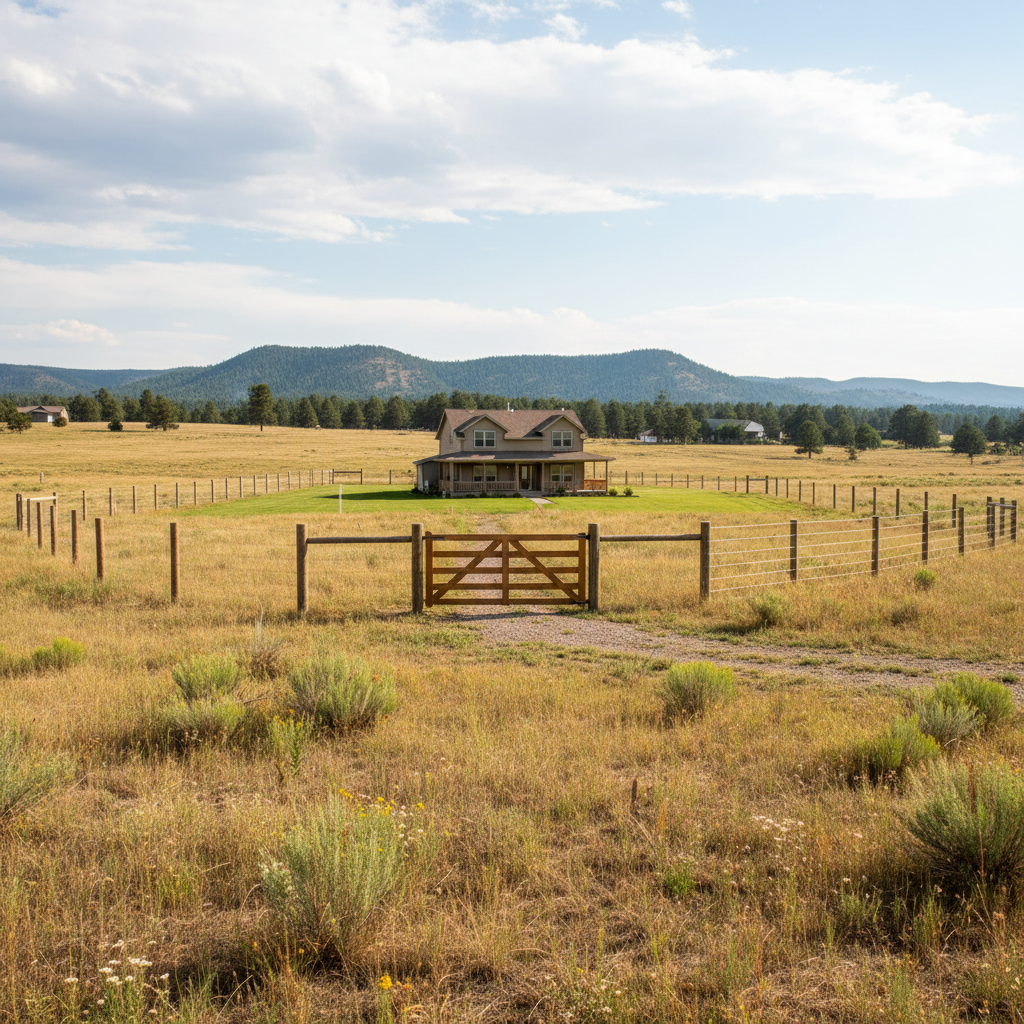
You are looking at putting up some new Farm Fencing. You might be expanding your herd as well as defining new pastures as well as replacing some old lines. A Farm Fencing project is a big job. Getting it right means good planning.
The Project Timeline: What to Expect
You will want to know how long a Farm Fencing project will take. From your first thought to the last post in the ground, this is not a one-day deal. Here is a rough breakdown of what our team has seen:
- Initial Consultation & Quote (1-2 weeks): First, you will reach out to a few contractors. Coastal Fence Co. will come out as well as walk your property as well as talk about what you need. We will get you a solid estimate. This can take some time, especially during busy seasons for Farm Fencing in Sturgis.
- Permits & Surveys (2-6 weeks, or more): This is often the biggest variable for Farm Fencing projects. You might need permits depending on where your property sits. In Sturgis, fence permits are generally required for any fence over 6 feet. Front property line fences might be restricted to 4 feet. You will also need to verify setbacks as well as utility lines. A land survey is important if you are dealing with unclear property lines. South Dakota law says that a survey is required if you are changing a common lot line as well as subdividing land. Do not skip this step. It saves headaches later on.
- Material Procurement (1-3 weeks): Materials get ordered once plans are solid as well as permits are in hand. It might be quicker if you are going with standard materials. Custom designs as well as specialty materials can take longer.
- Scheduling & Prep (1-2 weeks): Good contractors are busy. This is especially true in spring and summer. They will get you on the schedule. You will do your site prep during this time. We will talk more about site prep below.
- Installation (1-5 days, typically): The actual building part usually goes pretty quick once the crew is on site. Many Farm Fences, especially long runs, can take a few days. Things like rocky soil as well as many gates can make the Farm Fencing installation take longer.
- Curing & Final Touches (1-3 days): Concrete needs time to cure if it is used for posts. Then it is just final checks as well as cleanup.
From start to finish, you are usually looking at about 3 to 6 weeks for a Farm Fencing project. It can stretch longer depending on permits as well as material availability.
What to Expect During the Process
Here is what typically happens once you have signed on the dotted line with Coastal Fence Co. for your Farm Fencing project:
- Pre-Installation Call: Our team will confirm dates as well as go over any last-minute details. We will also make sure you have marked your property lines as well as cleared the fence path.
- Utility Locates: We will make sure South Dakota One Call has been contacted before any digging starts. Call 811. This is important. You do not want to hit a power line as well as a water pipe.
- Post Hole Digging: This is where the heavy machinery comes in for your Farm Fencing. We will be digging holes to the right depth. Our team adjusts for the Sturgis soil, which can range from loamy to heavy clay. Clay holds moisture as well as expands, so you need good drainage with a gravel base. Sandy soil does not offer much stability. Posts need to go deeper as well as often require concrete in sandy soil. A general rule is at least one-third of the post length goes underground. In addition, you need 6 inches for a gravel base. Posts are always below the frost line to prevent heaving.
- Post Setting: Posts go in plumb as well as level. We will use concrete or compacted gravel to make sure they are solid. This depends on the fence type as well as the soil conditions for your Farm Fencing.
- Fence Construction: Wires are strung as well as panels are attached as well as gates are hung. This is where your new Farm Fencing really takes shape.
- Cleanup: We will haul away debris as well as make sure your property is left tidy.
How to Prepare Your Property for Farm Fencing
You can make the Farm Fencing process smoother as well as faster by doing some prep work:
- Clear the Fence Line: Remove any brush as well as old fencing as well as rocks as well as other obstacles where the new fence will go. The clearer the path, the quicker Coastal Fence Co. can work on your Farm Fencing.
- Mark Property Lines: Mark your boundaries clearly if you are certain of them. Get that survey done if there is any doubt. South Dakota law states that adjoining landowners are liable for one-half the cost of erecting as well as maintaining a partition fence. This is true unless otherwise agreed. Knowing exactly where that line is helps avoid neighbor disputes.
- Inform Neighbors: Talk to your neighbors early if your Farm Fencing is on a property line. Communication prevents misunderstandings.
- Secure Animals: Make sure any livestock as well as pets are secured in a different area. Keep them away from the construction zone for their safety as well as ours.
- Access: Make sure there is clear access for our vehicles as well as equipment to the fence line.
Questions to Ask Before Signing a Contract for Farm Fencing
You need to be sure you are working with the right folks before you commit. Do not be afraid to ask these questions about your Farm Fencing project:
- Are you licensed and insured? This is important. You want to make sure they are legitimate. You also want to make sure you are protected if something goes wrong.
- How long have you been in business, and do you specialize in Farm Fencing? Experience matters. This is especially true with the unique demands of Farm Fences.
- Can you provide references or show examples of past Farm Fencing projects? A good contractor will be proud to show off their work.
- Who handles permits and utility locates? Make sure this is clear. A reliable contractor will often handle these or guide you through the process for your Farm Fencing.
- What kind of materials do you use, and what are their specifications? You want to know about wire gauge as well as post type (treated wood, steel) as well as bracing for Farm Fencing.
- What is the estimated timeline from contract signing to completion? Get a realistic timeframe for your Farm Fencing.
- What is your payment schedule? Understand deposits as well as progress payments as well as final payment terms.
- Do you offer a warranty on your work and materials? A good warranty gives you peace of mind.
- What unexpected costs might arise? Get clarity on potential extras. This includes unforeseen rock removal as well as changes to the plan.
- What is your plan for cleanup and debris removal? You do not want to be left with a mess after your Farm Fencing is done.
Choosing the right contractor as well as knowing what to expect will make your Farm Fencing project a smooth one. Here at Coastal Fence Co. in Sturgis, we believe in clear communication as well as solid work. You will get a fence that stands strong for many years to come.