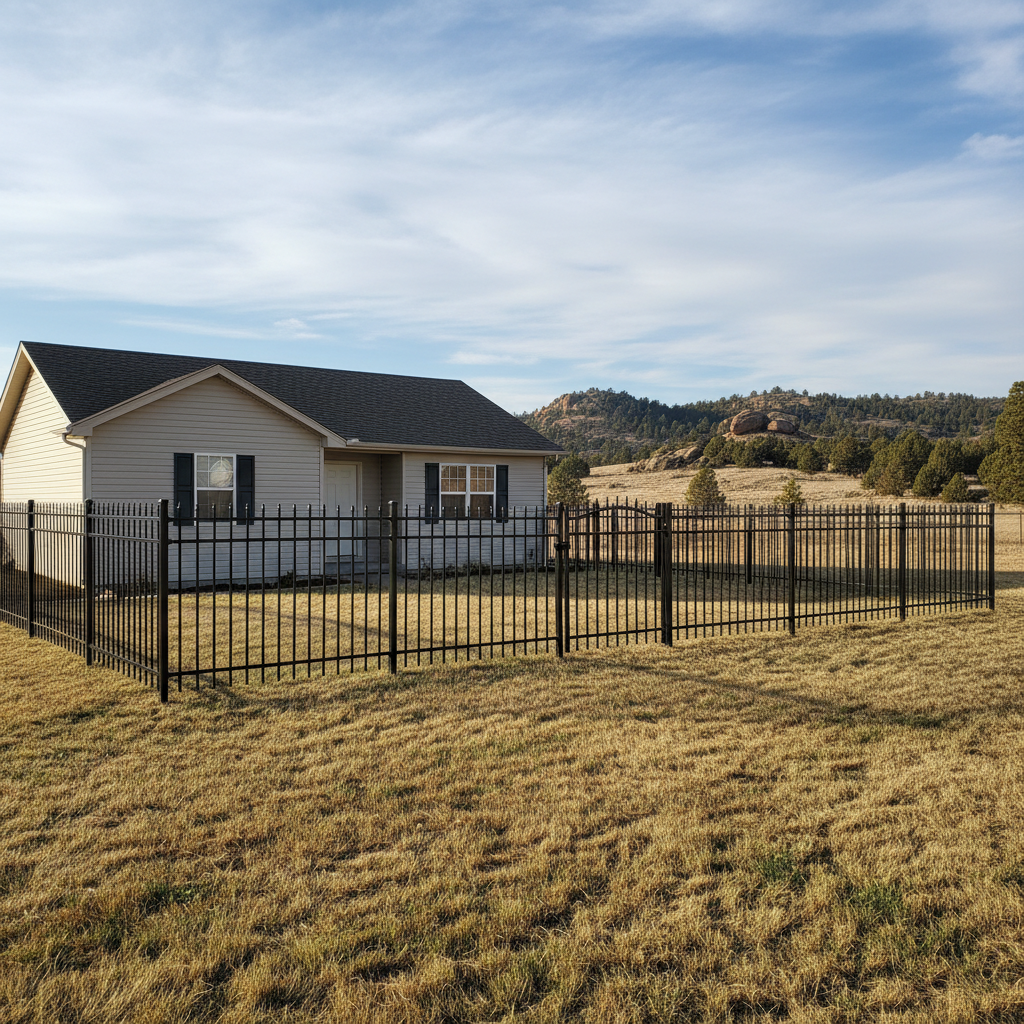
Alright, let's talk about the actual cost of ornamental iron fencing right here in Sturgis. I hear from lots of folks who love how iron looks but have no real idea what it costs. It's definitely not like buying a gallon of milk, is it? There's a whole lot that goes into it, and you really need to get a handle on those factors so you don't end up feeling ripped off or surprised by the final bill.
What Drives the Cost of Ornamental Iron Fencing?
You might think a fence is just a fence, right? Not so much with iron. The price can really jump around depending on a few key things. When I'm putting together a quote for someone, these are the biggies I always consider:
- Material Quality and Gauge: This one's huge. Are we talking about lightweight, pre-made panels you can grab at a big box store, or heavy-duty, custom-fabricated iron that's truly built to last? The thicker the steel (which means a lower gauge number), the stronger and pricier it'll be. Cheap iron bends and rusts way faster. Good iron, the kind we use at Coastal Fence Co, is made tough.
- Design Complexity: Simple, straight lines are always cheaper than intricate scrollwork, fancy finials, or custom-bent sections. If you're dreaming of lots of ornate details, just expect to pay more for the extra work and material involved.
- Height and Length: This part's pretty straightforward. More fence means more material and more time for installation. Taller fences also use more material and are trickier to put in safely, especially if the ground isn't perfectly flat.
- Gate Requirements: Gates are almost always the most expensive part of an iron fence project when you look at it per linear foot. A basic walk gate is one thing, but a double-swing driveway gate—especially if it's automated with openers, keypads, and safety sensors—can easily tack thousands onto your project.
- Site Conditions: This is where knowing the local area really pays off. Is your yard flat and easy to get to? Or are we dealing with a steep slope, rocky ground (which, let's be honest, we see plenty of around here in the Black Hills), or existing landscaping that we have to work around? Digging post holes in solid rock takes special equipment and a lot more time than digging in soft dirt. Oh, and we always have to think about utility lines, too.
- Coating and Finish: Most ornamental iron these days gets a powder coating for durability. The quality of that powder coating makes a big difference in how long your fence looks good and fights off rust. Some finishes cost more than others, but they're definitely worth it for how long they last.
Typical Cost Ranges for Ornamental Iron in Sturgis
Okay, let's get down to some actual numbers. Remember, these are general ranges, and your specific project could end up being higher or lower. But this should give you a decent idea of what to expect for a quality, professionally installed iron fence.
For standard, 4-6 foot tall ornamental iron fencing, you're generally looking at anywhere from $45 to $120 per linear foot. That's a pretty wide range, I know, but it covers everything from a basic, no-frills panel fence all the way up to a more solid, custom-designed one with a few decorative touches.
- Basic, Pre-Fab Panels (4-5 ft tall): For these, think closer to the $45-$65 per linear foot range. This usually means lighter gauge material, simpler designs, and quicker installation. It's good for marking boundaries but might not give you the security or longevity of heavier options.
- Mid-Range, Semi-Custom (5-6 ft tall): This is where most people land, typically around $65-$95 per linear foot. You'll get better quality steel, a more durable powder coating, and some choices in design elements like finials or pickets. This is a really solid, long-lasting investment.
- High-End, Custom-Fabricated (6+ ft tall, intricate design, heavy gauge): If you want something truly unique, with heavy-duty materials, custom curves, or lots of decorative work, you're looking at $95-$120+ per linear foot. This often includes complex gate systems or installations on really challenging ground.
Gates: A simple 3-4 foot wide walk gate can add $500-$1,500 to your project. A double-swing driveway gate, depending on its width and how complex it is, could be anywhere from $2,000 to $6,000+, and that's not even counting automation. If you want an automated gate system, you're easily adding another $3,000-$10,000+, depending on the motor, how you want to access it, and the electrical work required.
What Your Quote Should Include
When you get a quote from a good contractor, it shouldn't just be one big number. You really want to see a breakdown. Here's what I always make sure to include:
- Detailed Material List: What kind of iron, what gauge, panel style, post size, and finish are we talking about?
- Linear Footage: The exact length of fence we're putting in.
- Number and Type of Gates: Be specific: walk gates, drive gates, single, double, manual, or automated.
- Installation Labor: This covers the crew's time, digging, setting posts, putting panels together, and making sure everything is straight and secure.
- Site Preparation: Any necessary clearing, grading, or rock removal. This should be listed separately if it's going to be a significant cost.
- Post Hole Concrete: The amount and type of concrete used for each post.
- Permits: If the city or county requires them, who's in charge of getting and paying for them? We take care of this for our clients.
- Warranty Information: What's covered, for how long, and by whom (the manufacturer, us as the installer)?
- Cleanup and Debris Removal: Who's hauling away the old fence or any construction waste?
How to Avoid Overpaying for Your Iron Fence
Nobody wants to feel like they got ripped off, right? Here's my advice for getting a fair price:
- Get Multiple Quotes: Don't just go with the first guy you talk to. Get at least three detailed quotes from local, reputable fence companies. This helps you compare apples to apples and really understand what the market rate is.
- Be Specific About Your Needs: The more details you can give your contractor upfront, the more accurate their quote will be. Know your desired height, general style, and any specific gate requirements.
- Ask About Hidden Costs: Is there an extra charge for drilling into rock? What about unforeseen issues that might pop up? A good contractor will talk about these possibilities with you right away.
- Check References and Reviews: See what other Sturgis homeowners have to say about their experience with the contractor. Look for consistent quality and good customer service.
- Don't Automatically Go for the Cheapest: The lowest bid often means lower quality materials, less experienced installers, or corners getting cut. An iron fence is a long-term investment. You really want it done right the first time.
- Understand the Contract: Read absolutely everything before you sign. Make sure all the details you discussed are in writing.
An ornamental iron fence really boosts curb appeal, adds security, and increases your property's value. It's a big investment, no doubt, but when it's done correctly, it'll last for decades. Do your homework, ask the right questions, and you'll end up with a beautiful fence you're truly proud of.