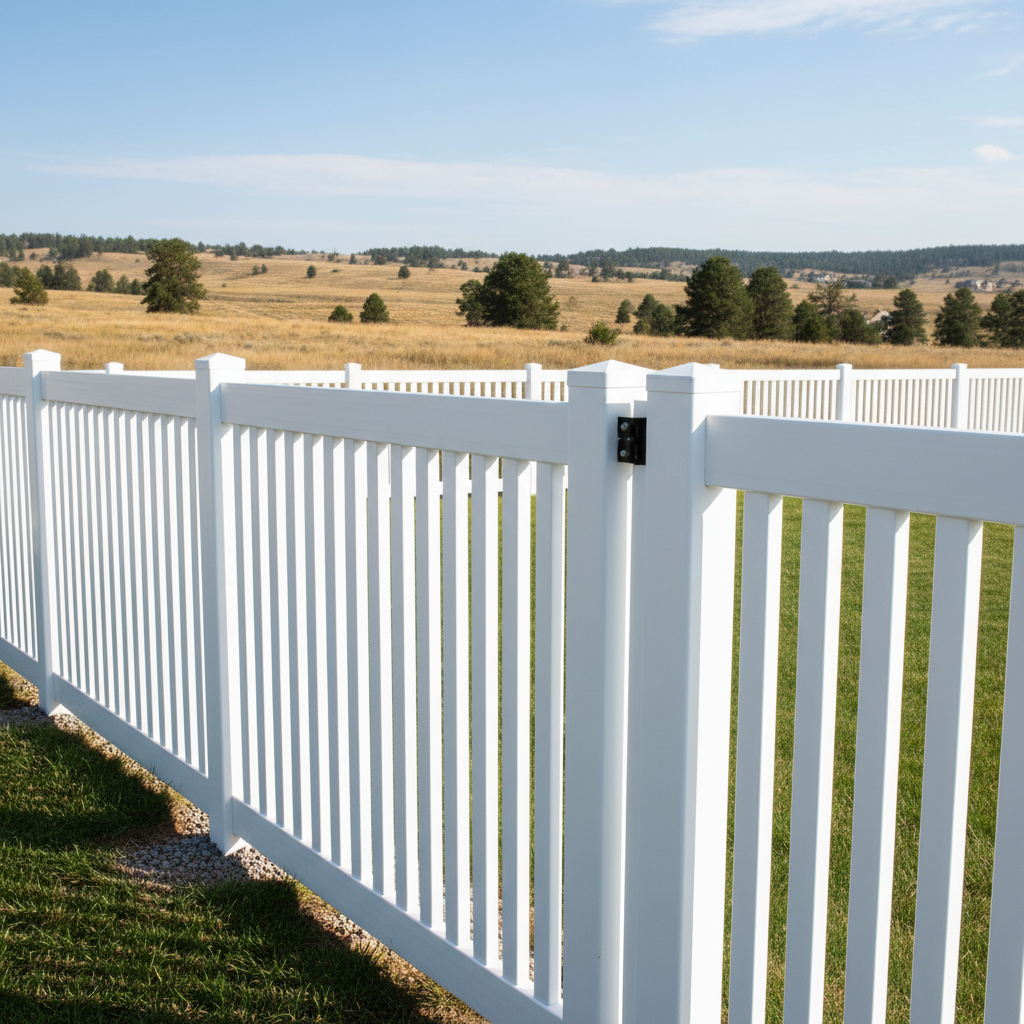
Is vinyl fencing really worth the upfront cost?
That's usually the first thing folks ask me when they're looking at options. Yeah, vinyl fences often cost more initially than, say, a basic wood fence. There's no getting around that. But here's what I've seen over the years: that upfront cost usually pays for itself pretty quick. Think about it – no painting, no staining, no rotting, no splinters. You're not buying expensive treatments every couple of years, and you're not spending your weekends scrubbing mold or replacing warped boards. For us here in Sturgis, with our wild temperature swings and sometimes brutal winters, wood fences take a beating. Vinyl just stands up to it better. It's a long-term investment in not having to worry about your fence.
How well does vinyl fencing hold up to our Sturgis weather?
This is a big one, especially with our Black Hills climate. We get everything from scorching summer sun to blizzards and high winds. Good quality vinyl, the kind we use at Coastal Fence Co., is designed for this. It's UV-stabilized, so it won't yellow or get brittle from the sun. That's a common concern, and it's a valid one if you're looking at cheap, low-grade stuff. But the better products? They're built to withstand those intense UV rays we get. As for wind, a properly installed vinyl fence with strong posts and good concrete footings will stand up just fine. We've seen some pretty hefty gusts come through here, especially out on the plains side of town, and a well-installed vinyl fence holds its own. It's also impervious to moisture, so all that snow and ice we get won't cause it to rot or warp like wood.
What kind of maintenance does a vinyl fence actually need?
Honestly? Not much. That's one of its biggest selling points. You don't need to paint it, stain it, or seal it. You don't have to worry about termites or rot. Mostly, it's just keeping it clean. If it gets dirty, a quick spray with a garden hose usually does the trick. For tougher spots, like mildew or mud splatter, a little mild soap and water with a soft brush or cloth is all you need. You can even power wash it on a low setting if you're careful. That's about it. Compare that to the regular maintenance schedule of a wood fence, and you'll see why people love the low-hassle factor.
Can I really get privacy with a vinyl fence, or will it look flimsy?
Absolutely you can get privacy. Vinyl comes in a bunch of styles, and full privacy panels are super common. These panels have interlocking boards that leave no gaps, giving you a solid barrier from your neighbors or the street. They're not flimsy at all when installed correctly. The panels are thick, and the posts are sturdy. We make sure they're anchored deep enough to handle anything. You can also get semi-private styles if you want a little airflow or light, but for true privacy, the solid panels are the way to go. They look clean, modern, and provide excellent seclusion.
Are there any local Sturgis regulations or HOA rules I need to know about for vinyl fences?
This is a crucial question, and it's one we always discuss with our clients. Yes, there can definitely be local regulations. The City of Sturgis has zoning ordinances that dictate things like fence height, setbacks from property lines, and sometimes even material restrictions in certain areas. For example, some residential zones might have a maximum height limit of 6 feet for backyard fences. If you're in an HOA, they'll almost certainly have their own set of rules that could be even stricter than the city's. They might specify colors, styles, or even require approval before you start. Before we dig a single post hole, we always recommend checking with the City Planning Department and your HOA, if you have one. It saves a lot of headaches down the road, believe me.
What's the typical lifespan of a good quality vinyl fence?
You're looking at a long, long time. Most manufacturers offer really strong warranties, often 20 years or even a limited lifetime warranty, because they know their product lasts. With proper installation and decent quality materials, a vinyl fence can easily last 20, 30, even 50 years or more. It doesn't rot, rust, or get eaten by insects. It won't splinter or warp. The biggest threats are extreme physical impact, like a car hitting it, or using really cheap, inferior products that might degrade over time. But a well-made vinyl fence from a reputable supplier, installed by pros like us, is built to last for decades. It's one of the most durable fencing options out there.
Is it possible to paint or change the color of a vinyl fence later on?
Short answer? Not really, and you generally shouldn't try. Vinyl fencing is manufactured with the color all the way through the material, not just on the surface. That's part of what makes it so low-maintenance – scratches or dings won't expose a different color underneath. If you try to paint it, you'll likely run into problems with adhesion, and the paint will probably peel, chip, or fade unevenly, making it look worse than before. Plus, painting a vinyl fence usually voids any warranty you have. If you're picking a color, make sure it's one you'll be happy with for the long haul. Most folks choose white, tan, or gray, which are pretty timeless anyway.